
JOURNAL · MATERIALS
WHAT IS SHOU SUGI BAN FURNITURE?
Shou sugi ban is a Japanese way of protecting wood with fire. In our ateliers in Belgium, we use it to make burnt wood furniture: tables, benches, seating and objects with a deep black, tactile surface.
THE TECHNIQUE
WOOD, FIRE AND OIL.
Shou sugi ban means burning the surface of wood until it chars. In Japan the technique is called yakisugi. For centuries it was used on cedar boards for the facades of houses, where the charred layer helped the wood stand up to weather and time.
The method is simple to describe: the surface is burnt until it turns black, the loose soot is brushed off and the wood is sealed with oil. The result is a deep, matte black in which the grain of the wood becomes visible again.
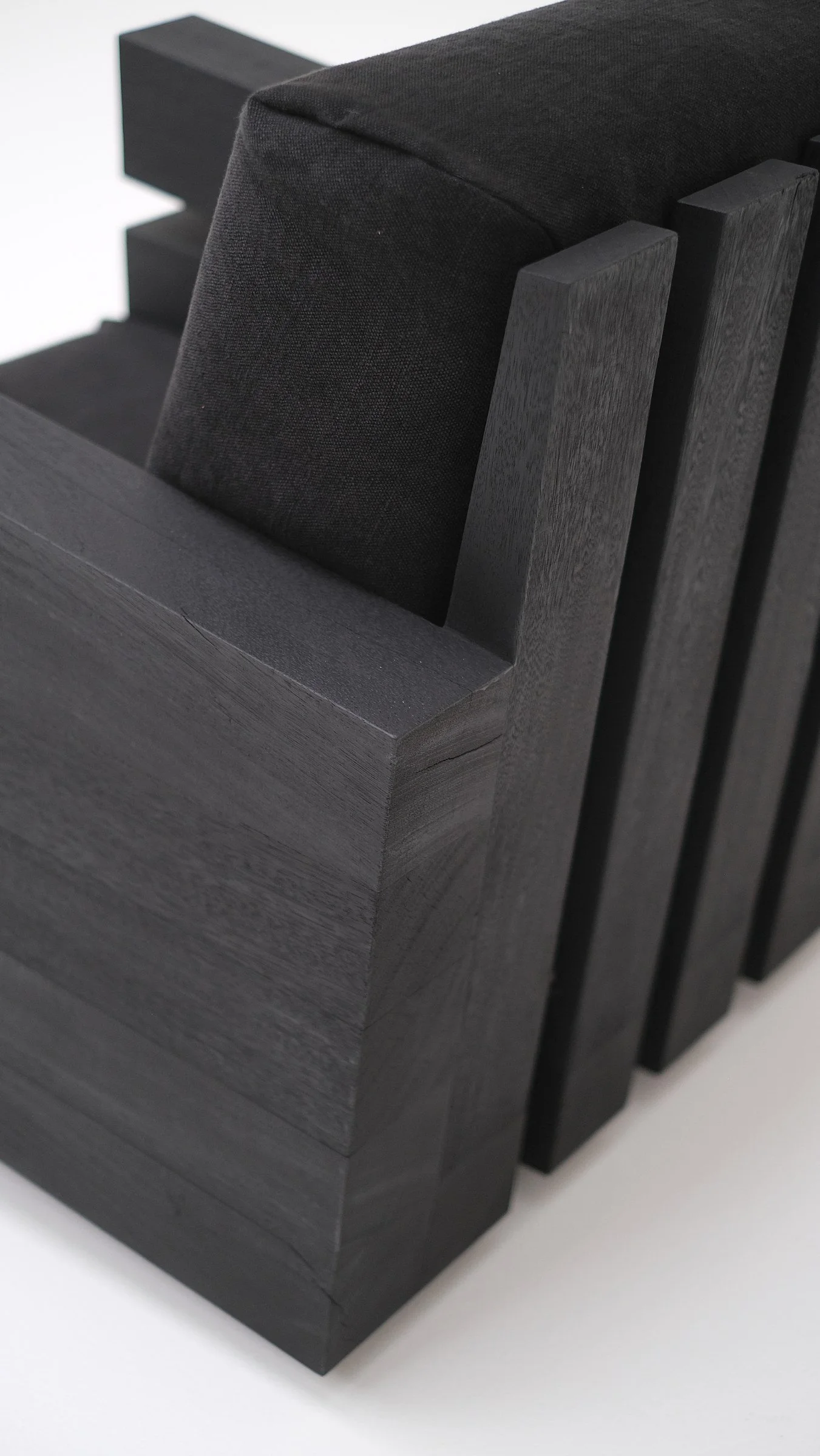
FROM FACADES TO FURNITURE
WHY BURNT WOOD.
What protects a facade also gives furniture its character. Fire deepens the colour, brings out the grain and gives every surface its own texture, so no two pieces are exactly alike. Burnt wood suits brutalist and sculptural furniture: solid volumes, clear lines and a surface that asks to be touched.
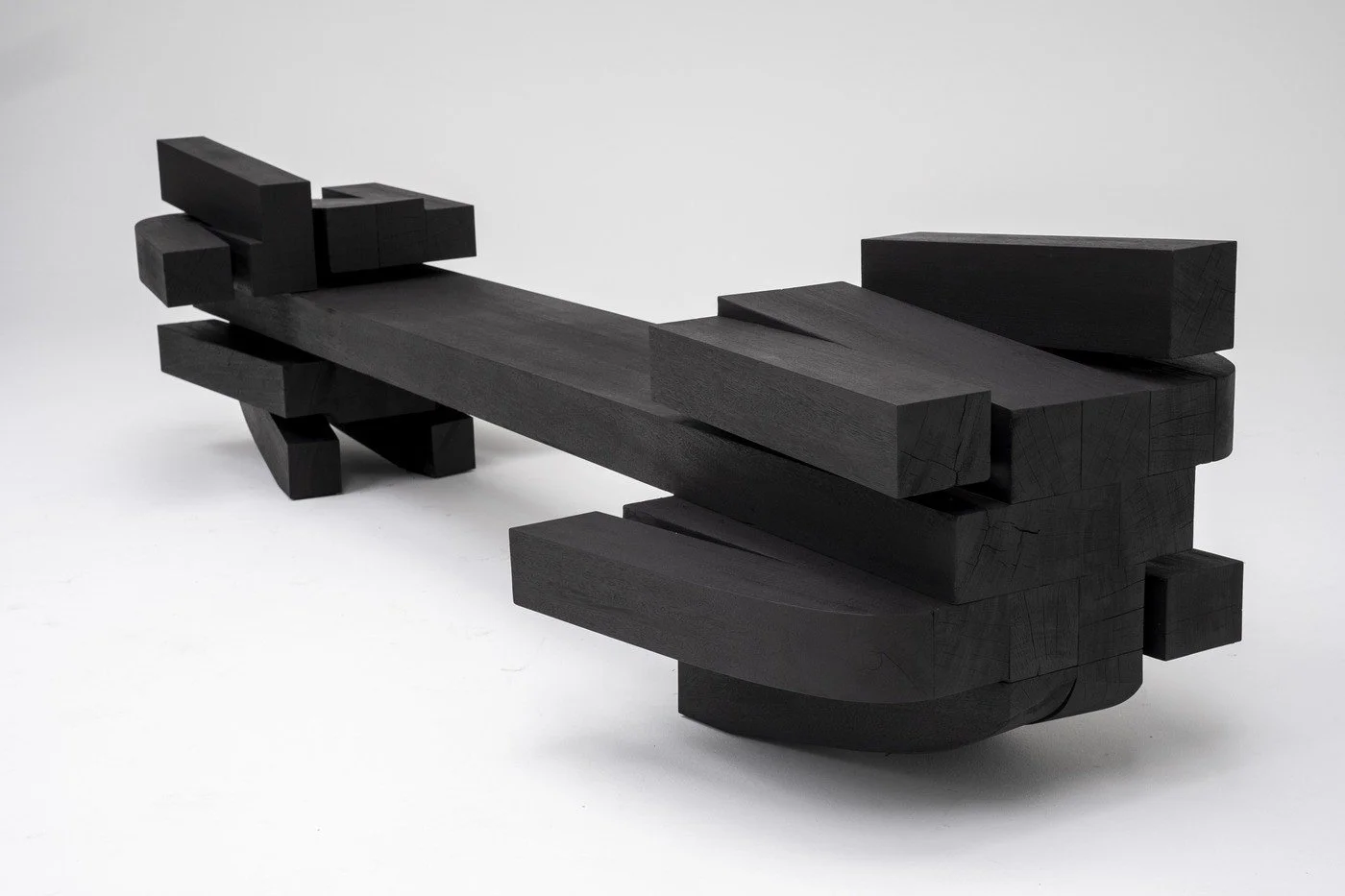
OUR ATELIERS · ZAVENTEM
HOW WE BURN OUR WOOD.
Our wood is burnt by hand. In our ateliers in Zaventem, Belgium, we char the surface of Iroko, oak, ash and walnut until it turns deep black, then finish it with wax or oil. The fire protects the wood and draws out its grain.
Design, prototyping and production take place in-house, from the first sketch to the final finish. Founded in 2017, Arno Declercq is a family-run design house working with clients in 42 countries.
MATERIALS
THE WOODS WE BURN.
Every wood reacts differently to fire, so the choice of species shapes the final surface. These are the woods we burn most often.
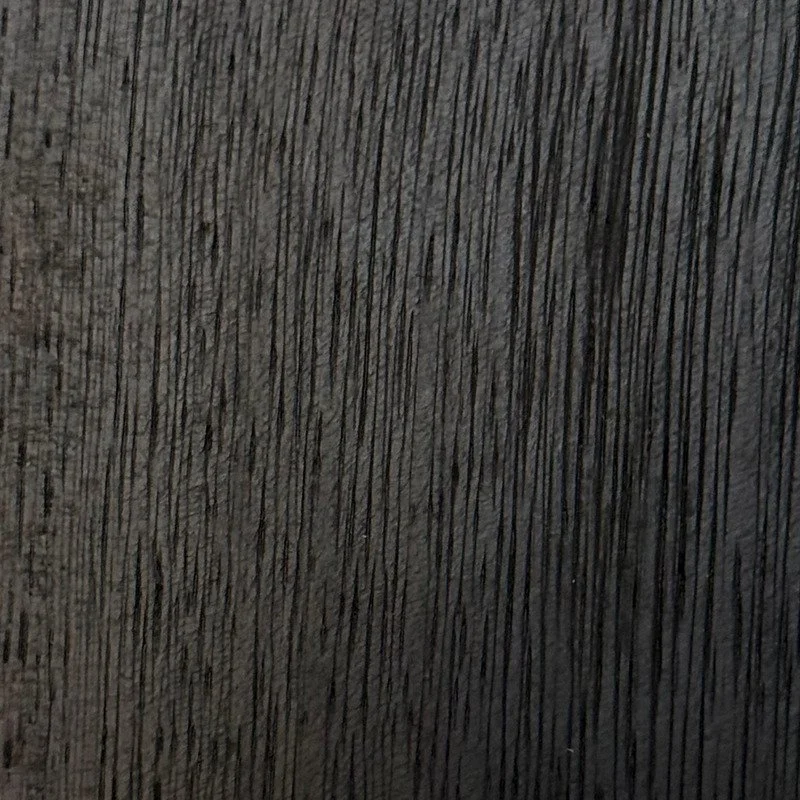 Iroko, burnt and oiledOur most used wood, in the Zoumey and Umbo collections.
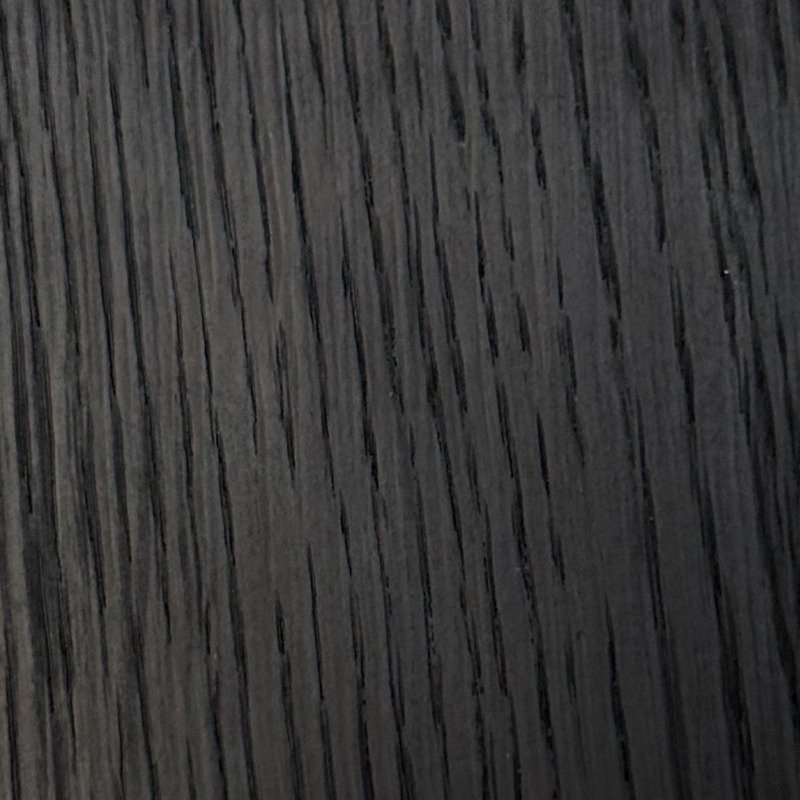 Oak, burnt and oiledUsed across the Permanent Collection, often finished with wax.
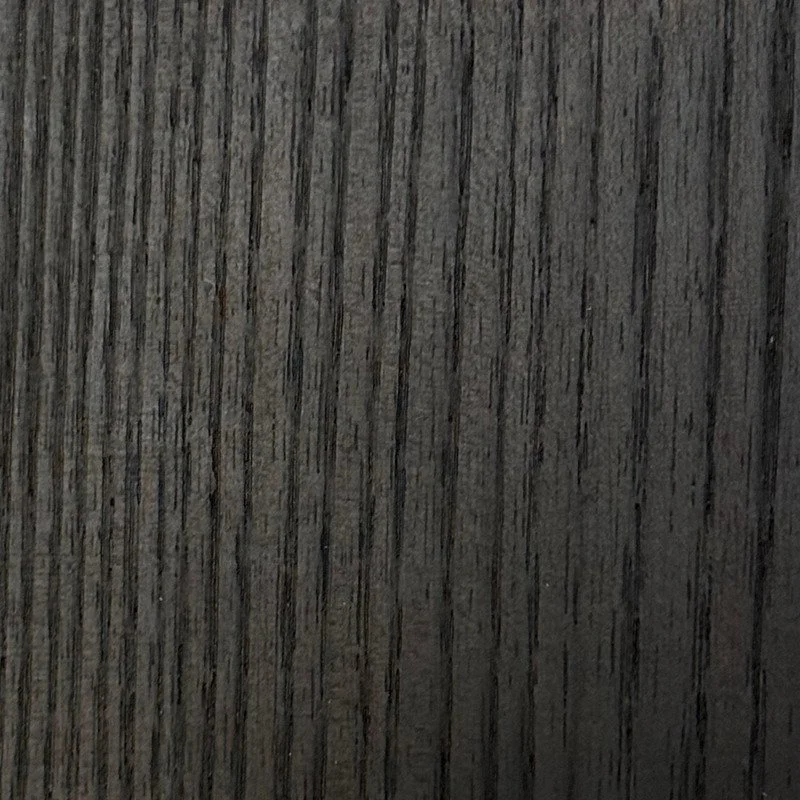 Ash, burnt and oiledThe wood of the Fundament Dining Chair and Dining Table.
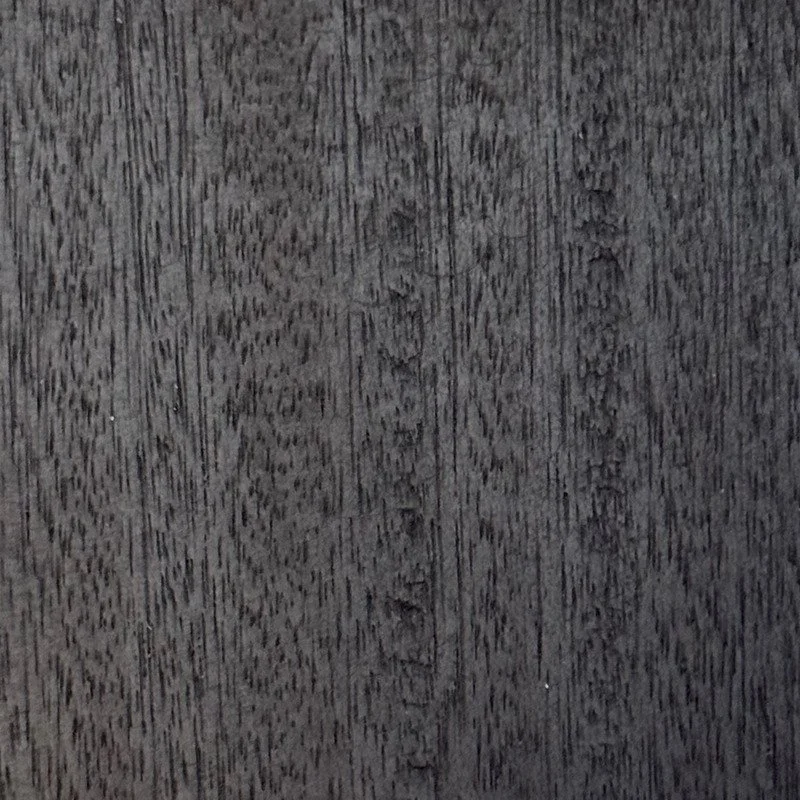 African walnut, burnt and oiledSofa 092022 and Dining Chair 092022.
 Afrormosia, burnt and oiledDining Table 032025, on a burnt steel base.
Finish samples from our atelier.
LIVING WITH BURNT WOOD
DURABLE, WITH A LITTLE CARE.
The fire only changes the surface of the wood. Sealed with oil or wax, burnt wood is made for daily use, in homes as well as in public interiors. Our work stands in places such as Stable restaurant in Antwerp, with a bar in burnt Iroko and steel, and MIX Hotel in Brussels, with a 4.5-metre Bunker sculpture in burnt Iroko.
Caring for it is simple:
- Dust with a soft, dry cloth.
- Wipe spills right away with a slightly damp cloth, then dry the surface.
- Avoid abrasive cleaners, solvents and scouring pads.
- Refresh the wax or oil when the surface looks dry. We are happy to advise on the right product for your piece.
IN OUR COLLECTIONS
BURNT WOOD, PIECE BY PIECE.
- Zoumey (2024): architectural furniture in burnt Iroko.
- Umbo (2025): curved structures in burnt Iroko and steel.
- Fundament (2026): seating and tables in burnt and black-oiled ash.
- Permanent Collection: furniture and objects in burnt oak and Iroko.
MADE TO MEASURE
YOUR SIZE. YOUR WOOD.
Every piece can be made to your dimensions, in the wood and finish of your choice. Indicative lead times are 8 to 10 weeks, and 10 to 12 weeks for larger pieces such as tables and sofas. See and touch the burnt finishes in our 500 m² showroom in Antwerp, by appointment.
Discuss your projectArrange a showroom visitContact the studioQUESTIONS
SHOU SUGI BAN, IN SHORT.
What does shou sugi ban mean?
Shou sugi ban (焼杉板) is usually translated as “burnt cedar board”. In Japan the same technique is mostly called yakisugi.
Is shou sugi ban the same as burnt or charred wood?
Yes. Burnt wood, burned wood, charred wood and shou sugi ban all describe wood whose surface has been blackened by fire.
Which woods can be burnt?
Cedar is the traditional choice for facades. For furniture we work with dense hardwoods: Iroko, oak, ash, walnut and Afrormosia.
Can a burnt wood piece be made to my dimensions?
Yes. Dimensions, wood species and finish are adapted to each project, and new designs can be commissioned.
Where can I see the pieces?
In our showroom at Hertsdeinstraat 26 in Antwerp, Belgium, by appointment.
Do you ship outside Belgium?
Yes. We work with clients in 42 countries and coordinate shipping from Belgium, including to the United States.